Introduction

Setting up wireless networking can be a frustrating experience. Available commercial routers vary greatly in their implementation and standards compliance, meaning that compatability between brands of router can be problematic. There are also significant security issues in implementing WiFi netowrks, compounded by the fact that manufacturers rarely update their firmwares and dump support for routers after only a few updates.

Thankfully, there are now some great options for installing open-source software on routers so that it’s easier to have cross-compatibility and maintain up-to-date security patches. The two main open-source software stacks for WiFi routers are: OpenWRT and DD-WRT . In fact, they are related to each other, with OpenWRT providing a lot of code for DD-WRT. They also serve slightly different interests, OpenWRT is focused on providing an open and modular architecture, ideally allowing low-level access to the nuts and bolts of router features, while DD-WRT aims for simplicity of use with a consisten user interface. There are also other open firmwares with narrower scopes, for example Xwrt-Vortex , Tomato , Advanced Tomato and Gargoyle which provide enhanced features for a smaller subset of routers (generally based on the Broadcom chipsets).

Continue reading

Introduction

Scientific publishing is undergoing a transition from corporate-controlled, for-profit publishing to more open models. While “Open-Access”, is part of this, there are a number of considerations important in true “Open Publishing”:

  1. Free access to the public (who pays for most of the research via their taxes!)
  2. Free submission of articles by authors
  3. Open Data - where original data and analysis workflows are made public
  4. Creative Commons - otherwise known as Copyleft, where rights are retained by the author but the content is usable with attribution
  5. Transparency of the review process (with or without anonymity)
  6. Open software, standards and tools used in the publication process

This post will focus on item (6) from above. While the choice of software tools is rarely considered as part of the Open Publishing ecosystem, it is of key importance. The economics of publishing are highly dependent on software. Open-source software enables the creation of open journals. This post will be followed-up with some discussion in the frture about how Open Publishing systems can be structured with incentives aligned to the best interests of the progress of science.

Continue reading

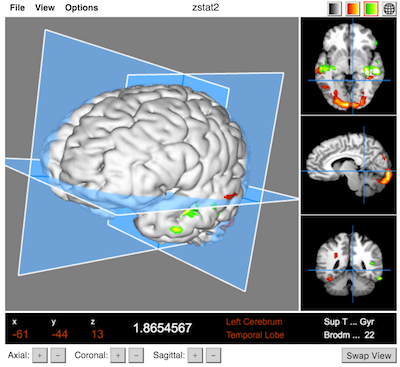
Sharing MRI data with colleagues can be a time-consuming exercise. The files are often large and data-sets need to be viewable in a flexible fashion. Rich features assist the communication of results, including:

  • 3D viewing
  • flexible slicing
  • overlay of specific volumes

While there are many software packages for running on the desktop, there’s nothing better than being able to point to a simple HTML link and open the scan data in a prepared format. Therefore, I went digging for an open-source package or library to display MRI renders and slices.

Continue reading

Author's picture

Francesco Giorlando

Musings on Research, Tech and Medicine
Dr Giorlando is a clinician-scientist with interests in neuroscience, psychophysics, addiction and temporal perception. He implements high-performance computing and electronic systems for research and enjoys hacking with digital media and sustainable technologies.

Scientist and Clinician

Melbourne, Australia