In the process of building a new personal website, I hunted around for static website engines. My previous website used an engine called habari, but development of the Habari Project is discontinued and I was interested in writing posts in markdown instead of plain HTML.

So let’s get a few questions answered immediately:

  • Why a static engine?
  • What is markdown?

A static website engine converts an intermediate syntax into HTML. It does this as a “static” page, which means that everything the site needs to function is prebuilt. This has three main advantages:

Continue reading

If you’ve ever noticed the 3D images of brain structures on Wikipedia, you may have been curious where they are sourced from.

Brainstem.gif

It turns out that they are generated from a freely accessible Japanese database, the Life Sciences Database Archive. This database is licensed under Creative Commons.

It includes anatomical models that can be downloaded as well as other public databases including gene expression databases. The anatomical models can be downloaded and browsed online at the Body Parts 3D site.

Continue reading

I recently attended a great symposium for time researchers in Tokyo. It was a fantastic to have a chance to exchange thoughts about new theories of psychological time and to see some very elegant experiments. The conference website is here: Time in Tokyo Symposium.

For the Symposium, I prepared a theoretical discussion of the specious present, considering how we may explore neurophenomenology with reference to recent neuroscientic findings. The slides for the talk are available here:

Continue reading

NDVI is an acronym for Normalised Difference Vegetation Index. It’s a very interesting measure of plant photosynthesis and health derived from measuring the difference in near-infrared and visual reflectance. I’ve recently been exploring its use for plant monitoring; here are a few calibration images.

[NDVI=\frac{NIR-VIS}{NIR+VIS}]

School_of_music-sm.jpg

School_of_music-sm.jpg

School_of_music-sm.jpg

The original image is on the left, with NDVI on the right

These images were shot using a full-spectrum modified Sony A7 camera with OM Zuiko 21mm/3.5 Lens and Schott BG3 filter at ISO 100, F11, 1/50 to 1/120 sec exposure.

Continue reading

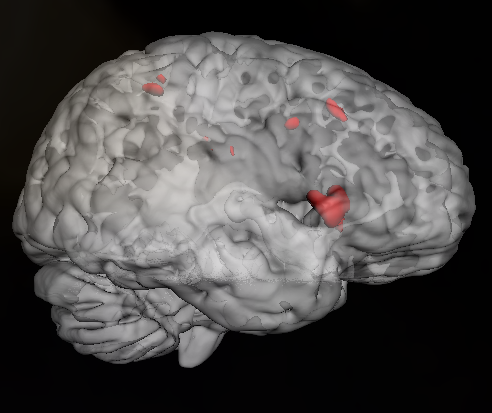
Publishing fMRI results usually involves the presentation of slice images that show regions of increased BOLD (Blood Oxygen Dependent Signal). However, fMRI data is inherently three dimensional and often it is difficult to visualise or appropriately present data in 2D formats.

Therefore, it can be useful to implement a method for displaying graphics in 3D form. Luckily, there are some good javascript libraries that interact with the HTML5 canvas attribute to present 3D objects.

Continue reading

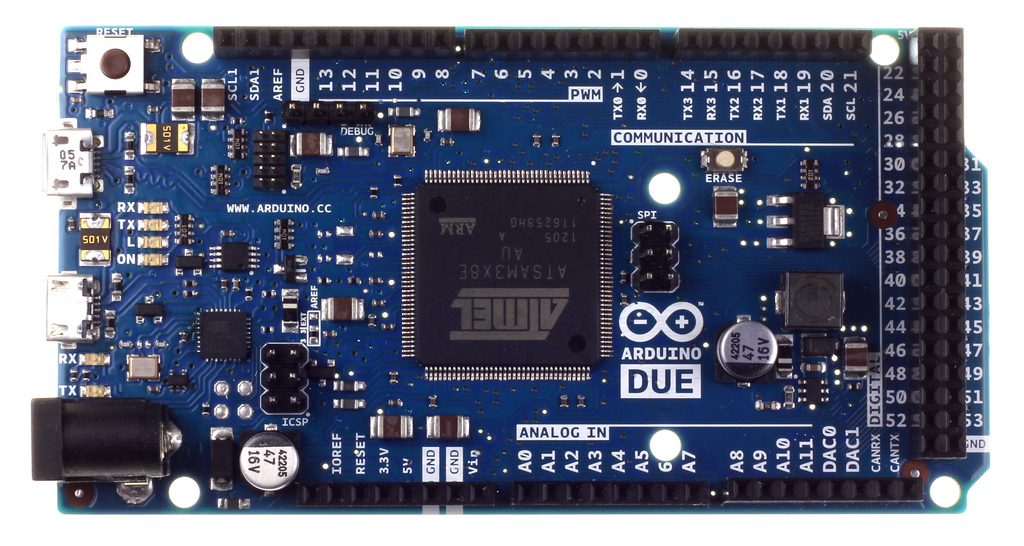
Psychophysics experiments often require passing messages and signals between different computers and devices. There are a number of methods that are generally used and the limitations of these methods are often a source of consternation for researchers.
Experiments designed to probe human temporal perception are particularly sensitive to timing errors in the apparatus. Therefore we have been developing a high resolution signal acquisition device for sending and receiving signals and doing some basic processing.

Continue reading

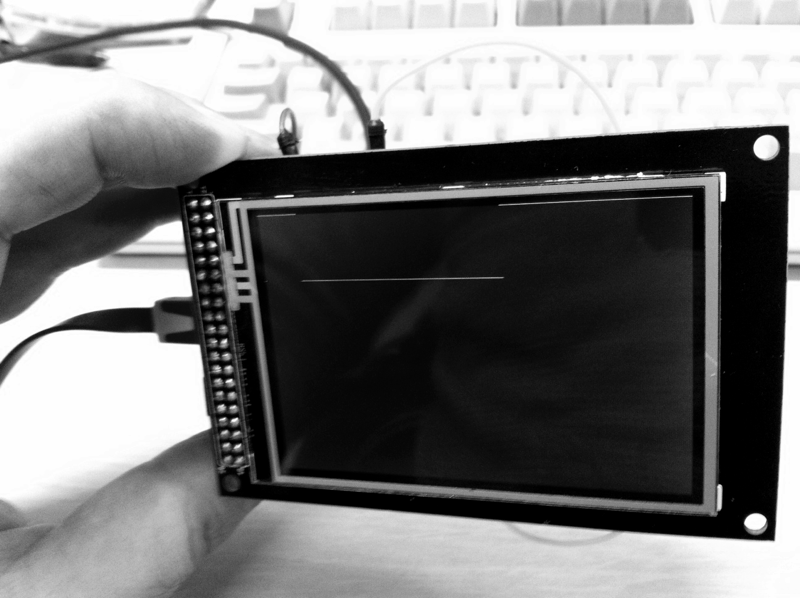
Recently, our lab has been working on a general timing measurement system to ensure that psychophysical timing of experiments is valid with different experimental setups ranging from calibrated lab CRT monitors to LCD projectors in MRI facilities.
Essentially, we aim to have a portable and easy to use recorder of digital and analogue signals that can be analysed for delays in hardware and software as well as jitter in various parameters. Our sensors will be signals from eye trackers, photodiodes on displays and manual responses as well as synchronised triggers sent to and from MRI and MEG machines.

Continue reading

Author's picture

Francesco Giorlando

Musings on Research, Tech and Medicine
Dr Giorlando is a clinician-scientist with interests in neuroscience, psychophysics, addiction and temporal perception. He implements high-performance computing and electronic systems for research and enjoys hacking with digital media and sustainable technologies.

Scientist and Clinician

Melbourne, Australia